BOOK APPOINTMENT
9067165837
CONTACT US
BOOK APPOINTMENT
9067165837
CONTACT US
  • Home
  • About us
  • Doctors
  • Services
  • Treatments
  • Patient Guide
    • IVF Process
    • FAQ
    • Blog
  • Career
  • Contact us
Menu
  • Home
  • About us
  • Doctors
  • Services
  • Treatments
  • Patient Guide
    • IVF Process
    • FAQ
    • Blog
  • Career
  • Contact us
Polycystic Ovarian Syndrome
September 10, 2022
guide-to-prenatal-testing
Guide to Prenatal Testing
February 5, 2024
Published by Dr. Gauri Gauns on September 10, 2022
Categories
  • Blogs
Tags

HC: What are fibroids ?

Dr Gauri: Uterine fibroids (also called as myomas) are non-cancerous (benign) growths that develop from the muscle layer of uterus.

HC: Are all fibroids the same?

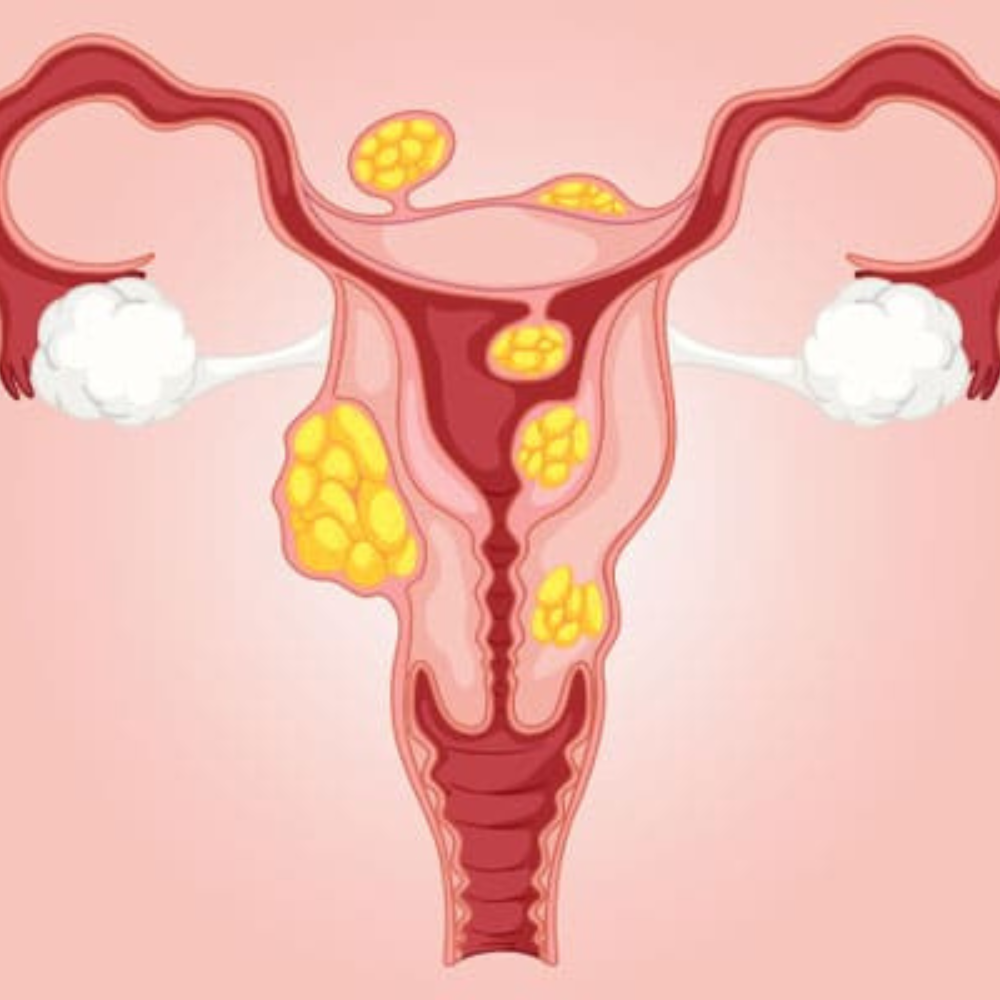
Dr Gauri: Fibroids can differ with respect to their size, location, number and by the symptoms that they can produce.

Uterine fibroids are generally classified as:

  • Subserous – growth is directed outwards
  • Intramural – growth centred within the uterine walls
  • Submucosal – growth towards the cavity of uterus

Rarely, fibroids can also form in cervix and broad ligament of uterus.

The size of the fibroids does not seem to be related to the severity of the symptoms. So even a small fibroid (especially submucosal type) can cause considerable symptoms and sometimes a woman with a large fibroid may be asymptomatic.

HC: Who is most likely to develop fibroids?

Dr Gauri: Approximately 60 to 80% of women will have fibroids. The following are some of the risks factors for uterine fibroids:

  • Obesity (obese women produce more estrogen)
  • Early age at first periods
  • Family history of fibroids in mother or sister
  • Metabolic syndrome( diabetes+hypertension+high cholesterol+obesity)
  • Women with polycystic ovarian disease and irregular periods
  • Age (older women are at higher risk than younger women )

HC: How are fibroids formed?

Dr Gauri: The exact cause of fibroids is not well understood but multiple factors play a role in their growth.

  • Genetics
  • Estrogen and progesterone hormones
  • Environment and lifestyle

HC : What are symptoms in women having fibroids?

Dr Gauri: Most women with fibroids are asymptomatic.

However, some may have the following symptoms:

  1. Changes in menses
  2. Heavy menstrual bleeding
  3. Painful menses ( cramps)
  4. Irregular bleeding

These women are generally anemic (low hemoglobin) and complain of easy fatigue.

  • Pressure of fibroids on surrounding organs can cause
  • Difficulty in passing urine or frequent urination
  • Difficult bowel movements
  • Abdominal cramps
  • Back pressure on kidneys causing swelling of kidneys(hydronephrosis)
  • Feeling full in the belly
  • Pain
  • Dull ,aching pain in  abdomen and lower back
  • Pain during sexual intercourse
  • Difficulty getting pregnant
  • Problems during pregnancy like miscarriage, preterm birth and pain in abdomen
  • Feeling lump in abdomen or increase in girth of abdomen

HC: What tests are done to diagnose uterine fibroids?

Dr Gauri: Unless a woman has symptoms, it is unlikely that she knows she has fibroids. They can sometimes be detected during routine pelvic examination done by a gynecologist.

Some common types of investigations done are

  • Ultrasound- mainstay of diagnosis.
  • MRI indicated in large and multiple fibroids
  • Hysteroscopy uses a small camera to visualize the inside of uterus.

HC: Is it true that pregnant woman with fibroids have complications in pregnancy?

Dr Gauri: Yes. The following problems may be encountered during pregnancy and childbirth

  • Pain: especially in large fibroids more than 5 cm
  • Recurrent miscarriage
  • Preterm birth
  • Premature separation of placenta (abruption)
  • More chances of baby being in abnormal position (breech,oblique) thus requiring caesarean delivery.
  • Excessive bleeding after delivery of baby .

Generally in pregnancy, fibroids can grow in 30% of patients, shrink in 30% and remain unchanged in 30%. The above mentioned complications are usually seen in patients with multiple fibroids and in whom the fibroids have grown during pregnancy. In the remaining, pregnancy may be uneventful.

Q: If I have fibroids, will it be difficult to get pregnant ?

A: Fibroids can impact fertility in the following cases

  • Submucosal fibroids which grow and bulge in uterine cavity
  • Multiple fibroids distorting the normal cavity and architecture of uterus
  • Fibroids near the tubal opening or in cervical canal.

However it is prudent to also evaluate other causes of infertility before attributing the issue to fibroids.

HC: When is treatment necessary for fibroid uterus?

Dr Gauri: Several factors are considered before recommending treatment to a patient viz;

  • Age
  • Severity of symptoms
  • Location, size and number of fibroids
  • General health of the patient
  • Whether patient is desiring pregnancy in future

Fibroids that are small and do not cause any symptoms may not need treatment. However surveillance will be important by regular check-up or ultrasound, to watch for increase in size or any obstructive symptoms. This is especially important in a woman nearing menopause where the hormone levels drop and the fibroid may shrink on its own.

Certain conditions which necessitate treatment are:

  1. Heavy , painful, irregular menstrual bleeding
  2. Uncertainty whether the growth is a fibroid or another type of tumor, such as an ovarian tumor.
  3. Rapid increase in growth of fibroid
  4. Infertility
  5. Obstructive urinary and intestinal symptoms

HC: Can medicines be used to treat fibroids?

Dr Gauri: Medications can be used as a temporary option in some women to reduce pain and bleeding. Some newer medicines may also help to shrink fibroids. However they have to be taken only under strict medical supervision.

HC: What type of surgery is done for fibroids?

Dr Gauri: Myomectomy is the surgical removal of fibroids leaving the uterus in place.

It can be done endoscopically (laparoscopy or hysteroscopy) or open surgery.

Hysterectomy is the removal of uterus. Laparoscopic and open surgery options are available.

HC: Do fibroids turn Cancerous?

Dr Gauri: Fibroids are almost always benign (non cancerous)

Very rarely (less than 1 in 2000) a cancerous fibroid called leiomyosarcoma can occur.

HC: Can fibroids be prevented?

Dr Gauri: Though they can’t be totally prevented, certain lifestyle habits can reduce your chances of developing fibroids. Regular exercise can help. So also, include plenty of fruits and vegetables in diet. Avoid alcohol, red meat, processed foods and refined sugars. Remember, excess body fat is an important risk factor for fibroids.

I believe our Lifestyle is a major determinant of Health and well being.

Share
0
Dr. Gauri Gauns
Dr. Gauri Gauns

Related posts

understanding-ivf-myths-vs-facts
February 22, 2024

Understanding IVF: Bursting Myths


Read more
understanding-the-fundamentals-of-egg-freezing
February 15, 2024

Understanding the Fundamentals of Egg Freezing at Sunshine IVF Centre


Read more
guide-to-ivf
February 11, 2024

Your Comprehensive Guide to In Vitro Fertilization (IVF)


Read more

Leave a Reply Cancel reply

Your email address will not be published. Required fields are marked *

For booking an appointment, Please call : +91-9067165837

Sunshine IVF centre is a speciality fertility clinic established to provide state of the art facility for assisted reproduction for couples having problems in having a baby.
Contact Us
Quick Links
  • Home
  • About us
  • Doctors
  • Services
  • IVF Process
  • Treatments
  • Booking Form
  • Career
  • Contact Us
Menu
  • Home
  • About us
  • Doctors
  • Services
  • IVF Process
  • Treatments
  • Booking Form
  • Career
  • Contact Us
Address Info

Address

Vision Hospital New Wing (Opp Max), Third Floor, Duler Ground Rd, Karaswada, Mapusa, Goa 403507

Phone

+91-9067165837

Email Us

wecare@sunshineivfcentre.com

Social Links
Facebook Instagram Youtube

Copyright 2024 Sunshine IVF Centre | Powered by Re-Infotech                       All Rights Reserved | Privacy Policy | Terms & Conditions

Dr Sachin A. Narvekar
MD(OBGYN)
Fellow Reproductive Medicine

Completed his post-graduation training in obstetrics and gynaecology from Goa Medical College in 2003. Subsequently he worked as a lecturer in Christian Medical Collage, Vellore in the department of obstetrics and gynecology where he developed keen interest in the field of reproductive medicine. He underwent subspecialty training in reproductive medicine under Rajiv Gandhi University of Health sciences at Bangalore Assisted Conception centre (now known as Milaan fertility centre) under the renowned reproductive medicine specialist Dr Kamini Rao. After completing his training he worked as a consultant in the department of Assisted Reproduction in the same institute.

Dr Sachin Narvekar has number of research papers to his credit. He has presented in number of scientific conference. He is been practicing in the field of Assisted Reproduction since 2007.

Dr Gauri R Gauns
MD(OBGYN)

Completed her post-graduation training in obstetrics and gynaecology from Goa Medical College.

Thereafter she had the opportunity to train under “Dr Firuza Parikh” at the Department of Assisted Reproduction and Genetics at Jaslok Hospital Mumbai. She moved to Goa in 2008 and set up ‘Dr Gauri’s Gynaec Clinic and IUI Lab’ at Morod Mapusa and has been practicing consultant in the area of obstetrics, gynaecology and infertility management. She has been associated with Vision Hospital right from its inception and was responsible for setting up a full-fledged IUI and andrology lab here.

Dr Elphiston Fernandes
MBBS, MS(Get Surg.) DNB Urology,
Fellow in Laparoscopy and reconstructive Urology

Dr Elphiston Fernandes has vast experience and expertise in the fields of Endourology (prostate and kidney stone minimally invasive treatment), Reconstructive Urology, Andrology (sexual problems and infertility in men)., Female Urology, uro-oncology (cancers of kidney, bladder, testis, prostate) and Kidney Transplantation.

BOOK AN APPOINTMENT

Fill in the details below to get FREE IVF consultation instantly.

WhatsApp us